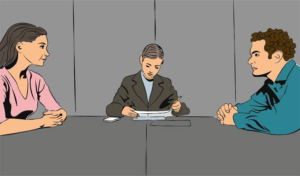

Yes, you can finalize a divorce in San Diego without ever appearing in a courtroom, but that doesn’t mean the court isn’t involved. A judge still reviews and signs your final divorce judgment. What you’re skipping is the appearance, the hearings, and the adversarial back and forth, not the legal process itself.
Once you and your spouse reach a full agreement through mediation, that agreement still gets converted into the required California paperwork, filed with the court, and formally approved before your divorce is legally finalized.
What ‘Without Going to Court’ Actually Means Legally in California
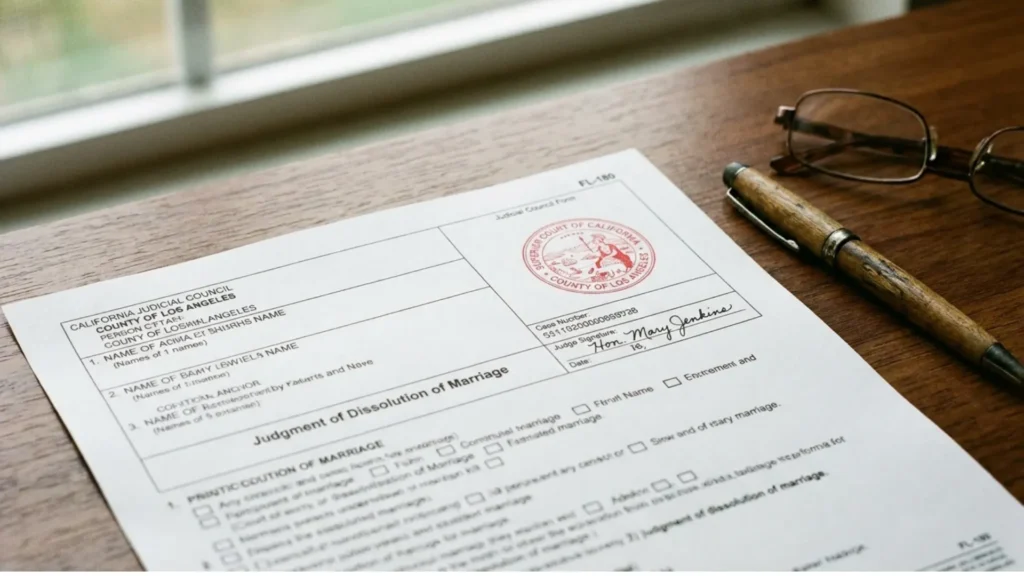
This is the single most misunderstood part of the entire process, and it’s worth being precise about it. Every divorce in California, contested or uncontested, mediated or litigated, ends the same way: with a judge signing a Judgment of Dissolution.
There’s no version of getting divorced in California that skips this step entirely. What ‘without going to court’ actually refers to is skipping the appearances, the hearings, and the adversarial motions that litigation requires, not skipping the court’s involvement altogether.
Yes, a Judge Still Signs Off, Here’s the Part People Get Wrong
When people hear that mediation lets them avoid court, some assume that means their divorce simply becomes final once they both sign an agreement. It doesn’t.
Once you and your spouse reach a complete agreement in mediation, covering property division, support, and custody if you have children, that agreement gets built into a formal legal document that satisfies California’s specific filing requirements. That document goes to the court, a judge reviews it, and once it’s approved, the judge signs the judgment, which is what actually makes your divorce final.
The difference from litigation isn’t whether a judge is involved. It’s that in a mediated, uncontested case, neither of you has to appear, argue a position, or wait for a hearing date months out. The judge is reviewing an agreement you both already reached, not deciding a dispute between you. That’s a meaningfully different role, and it’s why the process moves faster and costs a fraction of what a contested case does, even though the same court and the same judge are technically part of both.
There’s also a minimum waiting period to keep in mind. California requires a six-month waiting period from the date your spouse is formally served before a divorce can be finalized, regardless of how quickly you and your spouse reach an agreement. That waiting period exists whether you mediate or litigate. What mediation changes is how you spend that time. Instead of six months of hearings and motions, most of our clients finish their actual mediation process, then simply wait out the remainder of the statutory period while the paperwork moves through the court.
What If My Spouse Won’t Agree to Mediate at All
A meaningful number of the people who search for this question aren’t asking on behalf of a fully cooperative marriage. They’re asking because they want to avoid court, but they’re not sure their spouse is on board yet. This is worth addressing directly: mediation does require both spouses to participate, but ‘willing to mediate’ is a lower bar than most people expect, especially once the alternative is explained clearly.
Most spouses who initially resist the idea aren’t opposed to avoiding conflict. They’re either unfamiliar with how mediation actually works, or they’re worried that agreeing to it means giving something up. Once it’s clear that mediation isn’t about one spouse convincing a neutral third party to side with them, and that a consulting attorney can still be involved on each side to answer legal questions without turning the process adversarial, a lot of that initial resistance goes away.
If you’re not sure how to bring it up with your spouse, that’s a conversation we can help you think through during a free consultation, before either of you has committed to anything.
The Real Process From Agreement to Finalized Divorce
So if reaching an agreement isn’t the finish line, what actually happens between mediation and a finalized divorce?
Mediation produces the substance of your agreement, who gets what, what the parenting plan looks like, what support arrangements you’ve agreed to. That agreement then has to be translated into the specific legal forms California courts require, filed correctly, and served according to the rules, even in cases where both spouses are fully cooperative. Miss a form or file something incorrectly, and your case can sit in limbo for months waiting on paperwork corrections, even though you and your spouse agreed on everything from the start.
For San Diego couples with real estate, retirement accounts, or a business to divide, this step matters even more. Property division terms that read as clear and reasonable in a mediation session still need to be translated into precise language a judge can approve without questions, particularly for real estate transfers or retirement account divisions, which often require their own specific court order in addition to the divorce judgment itself. This is exactly where a mediated agreement can stall if it isn’t handled by people who do this specific kind of filing regularly.
Who Prepares and Files the Paperwork (and Why That Matters)
This is where a lot of people, especially those who assume mediation alone finalizes a divorce, run into unexpected delays. Reaching an agreement and properly documenting it for the court are two different skill sets. Getting the substance right in mediation matters, but so does making sure the resulting paperwork is filed correctly the first time, in the right format, with the right supporting documents, so the judge can actually approve it without kicking it back for corrections. We’ve seen cases where a fully cooperative couple sat on an agreed settlement for months longer than necessary, simply because paperwork was filed incorrectly the first time and had to be corrected and resubmitted.
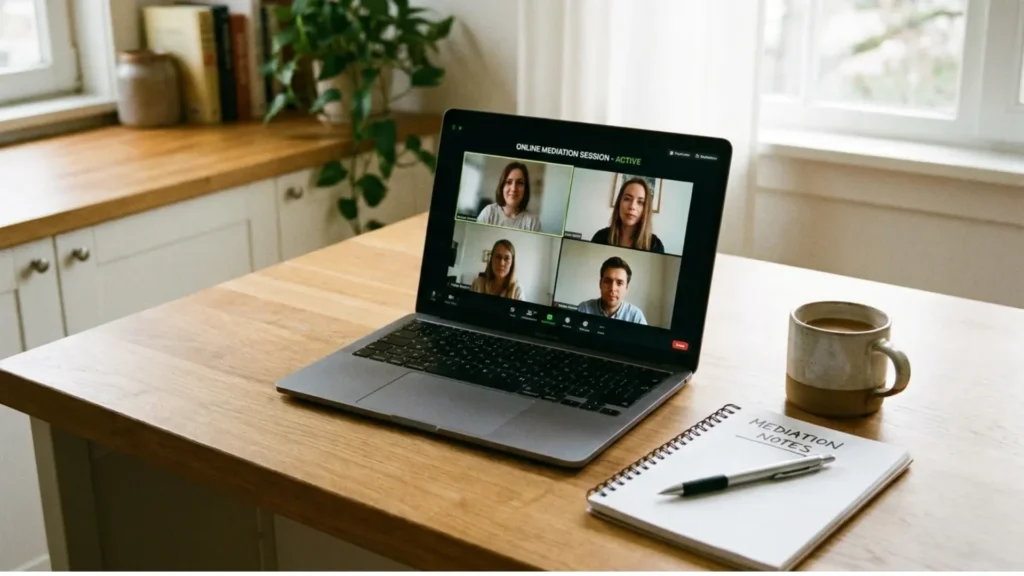
Our document preparation services handle exactly this part of the process, converting your mediated agreement into the correct California divorce paperwork and making sure it’s filed properly, so the only thing left is the judge’s review and signature. For couples who prefer to handle sessions remotely, our online divorce mediation option works through the same process without requiring in-person meetings, which some families across San Diego County, from Encinitas to Rancho Bernardo, find easier to schedule around work and parenting responsibilities.
If you have minor children, there’s one more layer worth knowing about. California requires a bit more scrutiny on custody and support terms when kids are involved, since the court has an independent interest in making sure any parenting agreement actually serves the children’s best interests, not just what’s convenient for the parents.
This rarely causes problems for mediated agreements, since the process is already built around working through parenting logistics in detail, but it’s part of why having the paperwork prepared correctly the first time matters even more when children are part of the picture.
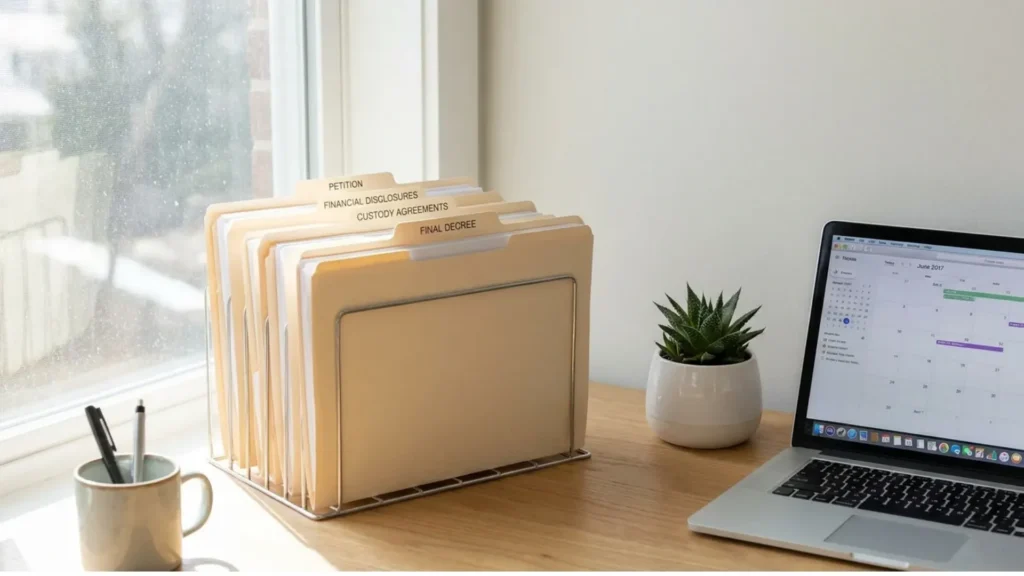
The full divorce mediation process, from your first session through a finalized judgment, is designed so the only court interaction either of you has is indirect: a judge reviewing paperwork you never have to personally stand in front of them to defend.
You can absolutely finalize a divorce in San Diego without appearing in court, and for most couples who reach a full agreement, that’s exactly how it works. But ‘without going to court’ means without the hearings and appearances, not without the court’s involvement at all. A judge still reviews and signs off on your case either way. The real question worth asking isn’t whether you’ll avoid court entirely. It’s whether you’ll spend the next several months in adversarial hearings, or reach an agreement together and let the paperwork, prepared correctly, do the rest.
Ready to find out what finalizing your divorce without court appearances would actually look like for your situation? Schedule a free consultation and we’ll walk you through the full process from your first session to a signed judgment.